
The Language of Power: Why ‘Girls’ and ‘Boys’ Just Won’t Do
Knowing Self-Aware Leadership
Hello KSKOers
Nothing annoys me more than managers who refer to their team as ‘the girls’. You may have been one of the girls, you might have heard it used, hey - you might have even been THAT manager! When a gang of male workers turn up and the supervisor says, “I’ll get the boys on it!”, my toes curl and my teeth clench. Join me as I share with you why they are terms that should be consigned to the history books and rubbish bins of forward thinking organisations.
Looking forward to joining you on your learning journey!

I’ve always worked in a female-dominated sector. Often, for every twenty women in a team, there’s one man. Sometimes there are no men at all. I’ve often heard people refer to their team as ‘the girls’ - because, in very simple terms, they’ve been a single-gender team of women. But, girls they are not!
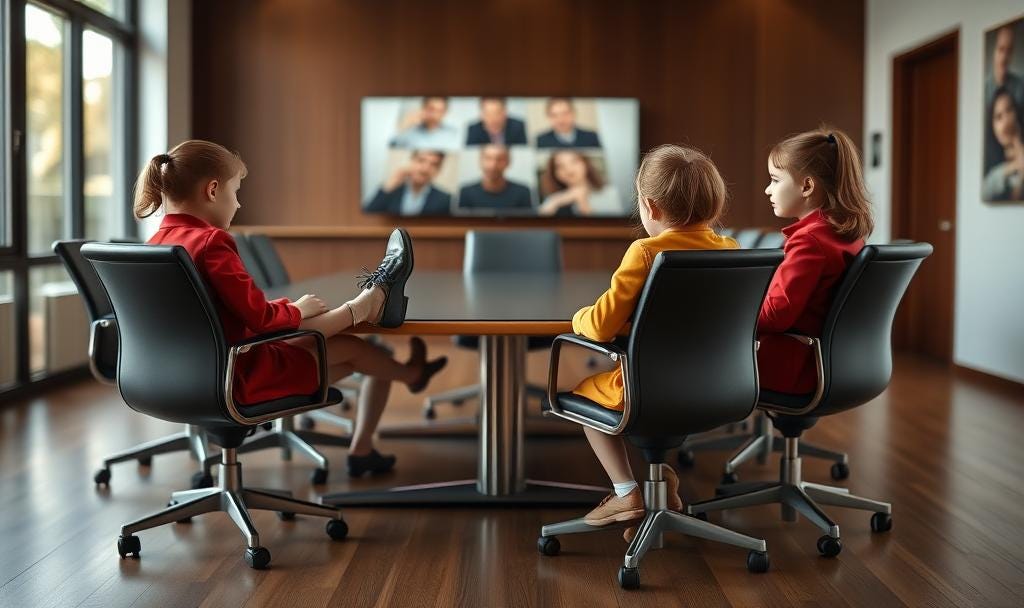
A few years ago, it became a bit of a ‘thing’. I found myself picking it up with my team and talking to them about why it wasn’t ok to be calling people ‘the girls’. I shared with them why I thought it encouraged an outdated sexist and ageist idea that had no place in our contemporary culture.
I lead a team of around a hundred people and during the whole eight years of employment, I maybe worked alongside five men. The situation came to a head because
one person in a team was a lot younger than their colleagues. They began to be referred to as ‘our kid’. It took the whole ‘girls’ thing to a totally different level and I was wholly uncomfortable with the infantilising of the colleague that was going on. The individual was already showing signs of performance slipping and increased sickness levels, which appeared to be exacerbated by colleagues mothering them and giving them permission ‘not to ‘adult’ today’! I had to step up and voice my concerns and convictions.
Everyone working in my team was over 18 and a tax paying citizen. They were responsible adults with homes, bills, children, elderly parents, pets and complete and unabridged DBS1 checks under their belts. Referring to a younger colleague as 'kid’ was not right. Not right for the individual and not right for the culture of our team. It set a tone of inequality and matriarchy which wasn’t and isn’t a healthy approach for a professional work team.
I flipped the narrative and asked about the use of this kind of language for older members of staff. I said, “If a new colleague joined the team and felt that these kind of terms were ok to use, and started referring to their older colleagues as ‘grandma’? How would we feel about that?”. There were mumbles and grumbles of ‘Oh no!’, ‘No!’. Why was ‘our kid’ ok and ‘our grandma’ not? One was complimenting youthfulness and the other derogatory to older age? Both give me the ick.
I’ve heard many male dominated sectors refer to their tax paying team members as ‘the boys’. Someone I worked with often referred to her husband’s work colleagues as ‘the boys’. It was used to infer her husband’s position of power over his colleagues: “I’ll get Bob to tell the boys to come and do it.” Now, to be clear - the boys were neither his personal gang of lackeys nor his group of child labourers. The so-called boys were employed by a large organisation and Bob was their supervising team leader. However way you look at it, the patriarchal ideas from their society and community infiltrated the workplace.
As we know, language matters. Nomenclature matters. Communications matters. What we call things are what they become - or remain. What leaders encourage, tolerate or quash sets the tone for behaviour which ultimately creates a psychologically safe or a psychologically toxic work culture.
The Pygmalion Effect is clear - people grow in to being that which you presume they are. You call a grown, responsible women a girl, and she will grow into the subservient character that’s always just a step behind someone else. A man referred to as a boy will forever feel like they have permission to be as responsible and accountable as a boy.
Now I know these are usually terms of endearment and people use them unconsciously and without malice. No-one’s nan ever called their 40 year old sons and nephews ‘the boys’ with an intention to cause offence. No shop manager has ever called the all-female team ‘the girls’ with the intention to keep them down at heel. Neither the boys, nor the girls, think twice about it. But that’s the thing with unconscious bias - it’s a bias nevertheless.
I know you may say that I’m overthinking it, but if I’m not thinking about the bigger picture and considering the knock-on effects of A to B to C, then who is? Isn’t that the job of leaders and leadership - to thinking ten steps ahead, be strategic in thought, word and deed? If it’s not the role of leadership to steer the organisation’s culture, then whose is it?
If we’ve always used ‘the girls’ and ‘the boys’ it takes a deliberate and conscious effort to change. I remember my senior team trying hard to change, and often forgetting and course correcting. For me, vocalising the change and sometime slipping up created opportunity for discussion, and only with making the unconscious conscious can we start to shift attitudes and language that install change. So, the change often opened a discussion - and that was a good thing.
So, what can we use instead? We can use alternatives like ‘the team’ ‘colleagues’ or - god forbid - people’s names! As we move into an age where gender identity and individualised pronoun choices are increasingly more important, consigning ‘the girls’ and ‘the boys’ to the corporate rubbish bin is a step in the right direction. If I never hear ‘the girls’ used in the workplace again, I’ll retire happy.
The Last Word
When we call people girls, there’s an unconscious sexism and ageism baked in. When we call people boys, there’s an unconscious sexism and ageism baked in. So, let’s move away from the matriarchal and patriarchal language systems of social and familial life. Let’s start shifting more consciously to a professional, person-centred language that recognises people for their individual contribution and personal responsibility. Let’s treat people fairly and equally so that they have permission to grow to their full potential.
Nia is an expert leader who talks the talk and walks the walk. She is an academically awarded thought leader in self-aware leadership and practices self-aware leadership every single day in her role as a Director in a Children’s Charity.
Find out more about Self-Aware Leadership by getting your very own copy of The Self-Awareness Superhighway! It’s an Amazon Best Seller in.....
🥇Business Management & Leadership
🥇Occupational & Organisational Psychology
🥇Business Careers


