It’s not like it was 25 years ago. When I started in the world of work, talking to people in senior positions wasn’t really the done thing. You did as you were told and tried your best not to find yourself at the sharp end of your boss’s pointing finger. I’m glad to say things are different now and employees have different expectations of their organisations. They hold their leaders to account or they speak up and move on. Join me in sharing my reflections on the last 20 years and observations on what Linda said.
Looking forward to joining you on your learning journey!
Start Here
I was lying in bed this morning and thinking about how leadership was when I started out in the world of work and musing about how different things are now. Of course, my reflections are biased. I started at the bottom and worked my way up, so as well and years, my levels of responsibility have changed too. “And with responsibility comes great power”. It also comes with a sense of confidence and knowledge that gives you a voice when others don’t.
I was pondering whether to make the 25 years of leadership the topic of this week’s blog and then I saw this video by the hilarious
Kate’s alter ego ‘Linda’ is the best worst manager you’ll ever come across. I hope you can access this skit on LinkedIn! The bit where Linda responds to the question about staff retention with “I don’t care. I just get Rachel in Recruitment to find someone else.” made me laugh too much, in a ‘you laugh or you cry’ kind of way.
Kate’s post reads…..
Who thinks the same style of leadership which was acceptable (or tolerated) 20 years ago is still OK in 2025?
Linda does.
How might you prove she’s wrong?
- High staff turnover and repeat recruitment costs - Low employee motivation and engagement - Low performance and productivity - High levels of conflict or tension - Low trust, innovation and collaboration - Lack of ownership and accountability - Poor wellbeing and high sickness absence
If you have any of these issues, it might mean the leadership skills in your senior team need a refresh.
I suspect lots of you will be reading this and nodding as you allocate names to different individuals who haven’t changed, learnt or adapted their leadership style.
Leadership Then
25 years ago we had fewer leaders and far more bosses. I remember my very first job. I worked for an NHS Trust at their headquarters. My manager was a formidable woman. Tall in stature and flash in suit. I remember she wore a shiny grey trouser suit, very popular in the late 90s / early 2000s. It was a made from a stiff fabric that didn’t crease, which was an apt reflection of her style. She taught me how to set out Board papers with a level of pin point precision I’ve not experienced since. Sadly she did it through a fear of getting it wrong, not an aspiration to get it right.
As an underling, challenging decisions and having ideas were not the done thing. You came to know that you should never share your thoughts and ideas. Unsolicited opinions were shot down with condescension, like a trinket swatted by a cat. It wasn’t about showing respect to the role it was about showing deference to the individual.
The aviation industry grabbed hold of this approach and gave it a thorough shake. It’s one thing to have an unapproachable leader managing board papers but quite another to have an ego driven leader flying a plane. The safety culture shift of the aviation industry has proliferated through to other sectors. That’s what happens when practice is good in one sector - it spreads to others.
Here’s a section from my book, The Self-Awareness Superhighway talking about inclusive leadership, which is one of the key differences between leadership then and leadership now:
Inclusive Decision Making
In the social care sector, people talk a lot about moving away from ‘doing unto’ to ‘doing with’. There’s a very strong movement away from doing things to service users and to doing things with service users. This is a major cultural shift, when for so long the mantra has been, people don’t know what they need and people don’t know what’s good for them. There’s been a stark realisation since the mid-noughties that, regardless of what people think others need, if they don’t want it, they won’t engage. If you think someone needs to learn to read and you put on adult literacy classes and no one comes because they want to learn to sing or play football, then maybe you need to rethink adult literacy in terms of song lyrics and football rules.
It’s the same in business. If you’ve decided that what your clinical team needs is an extra evening cardiology clinic to get through their waiting list but you haven’t asked whether anyone’s available to work those hours, then what you’ve got is strategic-level disconnect. And what you need is inclusive decision making.
A major roadblock to effective self-aware leadership, which you’ll read more about in the next chapter, is strategic-level disconnect. It’s that lack of connection between the people at the strategic level of the organisation making the decisions and those people at the operational end who are tasked with implementing them. An enabler for this is inclusive decision making. Inclusive decision making bridges the gap of detachment between the strategic and operational functions within organisations.
There is a link between detachment, emotions and decision making because feelings are linked to the way people make decisions, think and behave.4 Relations-orientated leadership involves behaviour that explicitly includes subordinates in decision making.5 In the discussion about resilience and wellbeing leadership, inclusive decision making is referenced in the definition. Including people in decision making is a mitigator against strategic-level disconnect, and it impacts people’s emotional attachment, feelings of purpose, contribution, acknowledgement and, ultimately, happiness in the workplace.
Alison Lagier (episode 7) said that because feedback is filtered at the strategic level, people operating at that level need to actively seek out input from others. Without that input, it might mean they can’t achieve their goal, and their plans end up being simply underivable. Alison’s advice? Take people with you on your journey. A project might be longer in the planning, but delivery is going to be more attainable. Because you’ve put the effort up front in the planning, the delivery part of the process will be shorter, smoother and more likely to end up with a positive outcome. If you don’t, the planning may be far shorter, but the delivery’s going to be fraught with problems and obstacles and you’ll have lots of unhappy people challenging you when you think you’re near the finishing line. Front load your time and weight your engagement to planning rather than rectification. Your pocket will probably be better off too.
Organisations need to consider innovative methods to ensure inclusive decision making isn’t tokenistic and is really valued. You need to think more about co-production as the way you do things, which is a level of commitment and resource allocation significantly greater than the predominantly consultative way organisations usually involve people in decision making. Organisations are forever distributing surveys that ask questions like “We’re going to be closing down our second office.
Are you okay with that?” and feeding back that there weren’t enough responses to make the ‘nopes’ statistically significant and, therefore, they’re ploughing ahead as proposed. They then have to deal with those unhappy people waving placards two feet from the finish line.
Liam Maguire (episode 19) said the best leaders push authority and information down through organisations to allow other people to make decisions. Organisations that retain decision making at the top are missing opportunities to innovate and make the best decisions for the customer, patient or service user. Mission command, the military approach to decision making, empowers people at all levels to make the right decision in the right place at the right time. This resonates with our earlier exploration into organisations that continue to operate in the ‘pyramid shape’ of the industrial paradigm versus those that are moving to a more fluid and adaptable structure in response to changing demands of knowledge-based work.
Leadership Now
Today, the leadership rhetoric is very different. For any leaders who’ve kept up with the shift in expectation on leaders and the skills and capabilities needed to be a modern leader, you’ll know that being a boss no longer cuts it.
Modern leadership is about collaboration and inclusion. It’s about being humble and recognising your gaps. It’s about being vulnerable enough to actively seek out others who can fill your gaps, so that together you make a strong and cohesive whole.
Junior staff have access to senior staff and conversations are open and encouraged. Team wide discussions are opportunities for ideation and exploration. Everyone’s view is acknowledged and valid. No one is viewed as less than, regardless of their place in the organisational structure.
Follow the Compass
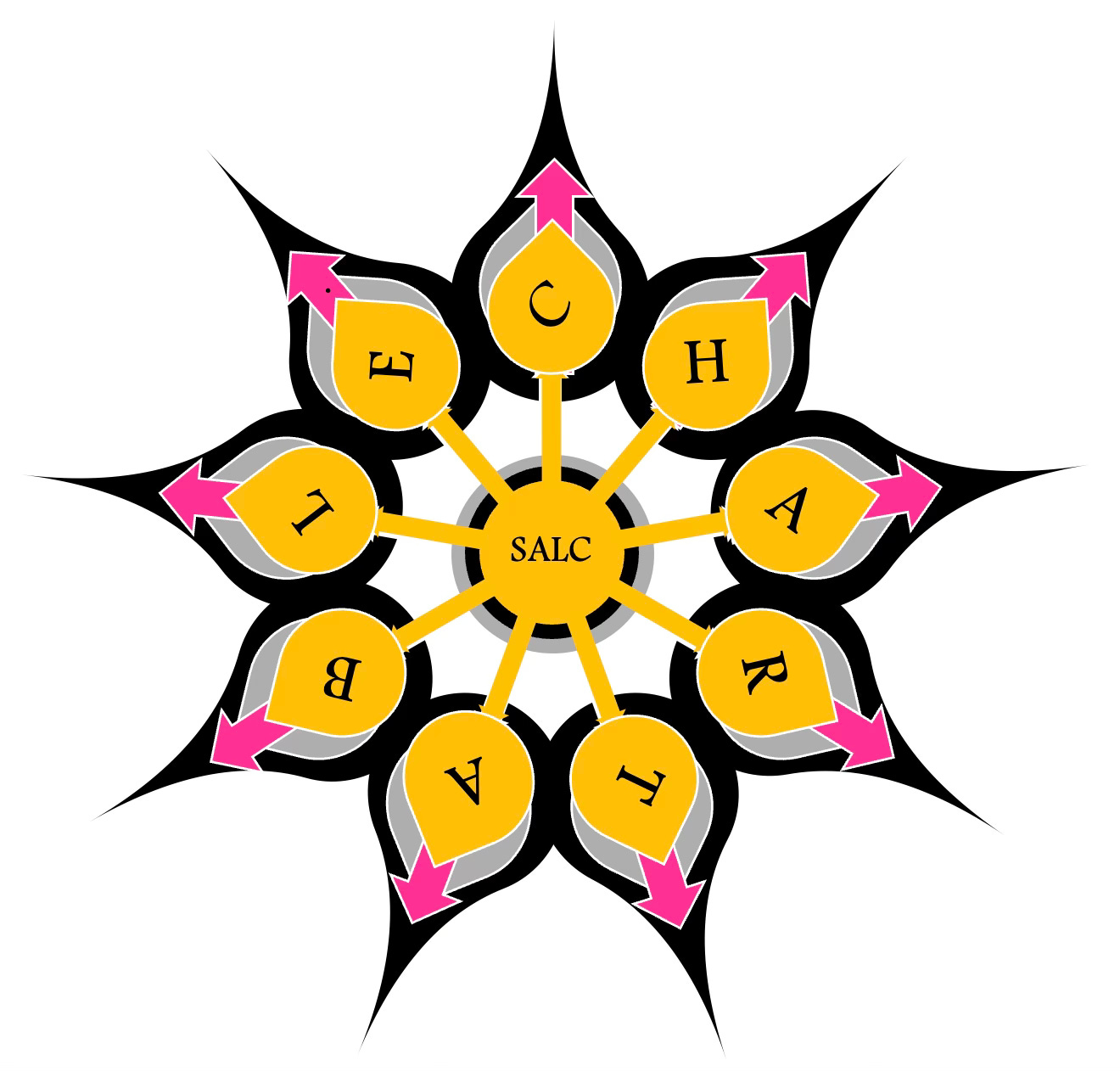
How can you keep moving and responding to an ever changing world with ever shifting expectations on leaders? My view is that you be guided by the 9 behaviours of the self-aware leadership compass.
CARE: is about empathy and respect, appreciating the human aspects of the lives of your colleagues whilst not shying away from having difficult conversations.
HUMILITY: is about letting others’ light shine, supporting them to step forward and being open when you don’t know the answers.
AUTHENTICITY: is about living your values, beliefs and priorities with integrity and making conscious decisions about who the professional ‘you’ really is.
REFLECTION: is about being reflective in the moment and giving yourself the opportunity to respond rather than react so you can grow and become the best version of yourself.
TRUST: is about kindness and consistency where you will instil trust in your colleagues so that they choose to follow you.
ADAPTABILITY: is about responding with openness, flexibility and a growth mindset to the changing demands of your role and the changing needs of your people.
BEHAVIOUR is about modelling the behaviour you expect to see in your organisation and rewarding the behaviour of those that live the values you espouse.
LISTENING: is about giving voice to the quieter and marginalised people in your organisations to ensure everyone is heard.
EXPERIENCE: is about learning from your experiences and sharing what you know with others to nurture their growth and development.
The Last Word
As I look back over the past quarter century, it’s clear that leadership has travelled a long way from command and control to care and collaboration. The best leaders no longer lead from an ivory tower but from beside their people, listening, learning and adapting as they go. Inclusive, self-aware leadership isn’t a passing trend; it’s the foundation of thriving, resilient organisations. So as you continue on your own learning journey, take a moment to reflect on where you are on the self-aware leadership compass. Remember, leadership isn’t about being in charge, it’s about taking care of those in your charge.